Product Design
ScriptPortal
A script editor for people who make videos. Every scene is a card you can pick up and move, and the agent lives in the same bar as the words you are writing.
01 · The card stack
One scene at a time, the rest within reach
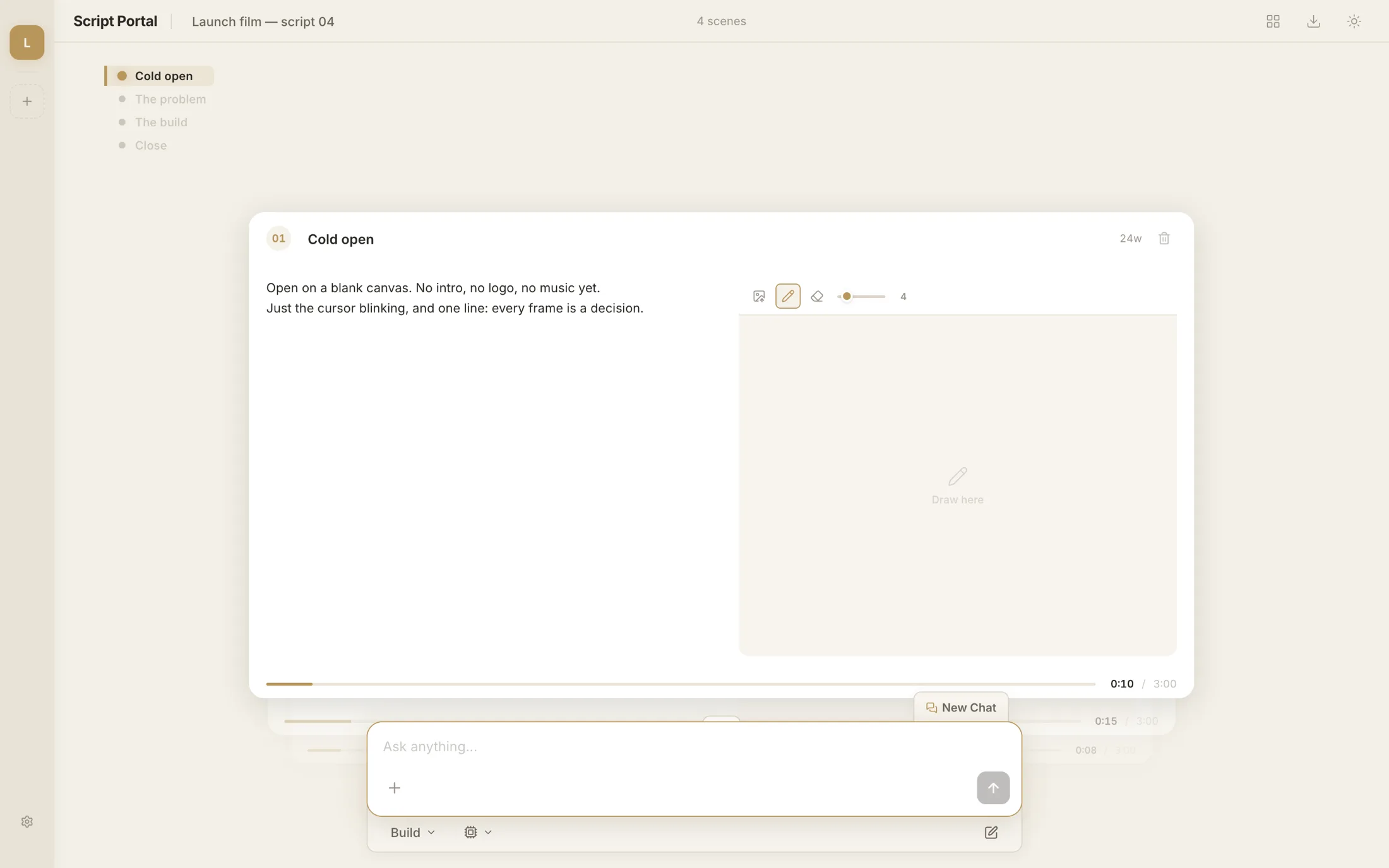
A script is a stack of cards, and only the card you are on is full size. The ones behind sit dimmed and stacked above, the ones ahead peek in below. You scroll and the stack snaps card to card, so you always know where you are without a sidebar full of text.
02 · Two views
Read it as cards, or read it as a page
The same script, two ways to hold it. The card stack is for writing, when you want one scene and nothing else on screen. The page view is for reading the whole thing top to bottom, script on the left and the visual on the right.
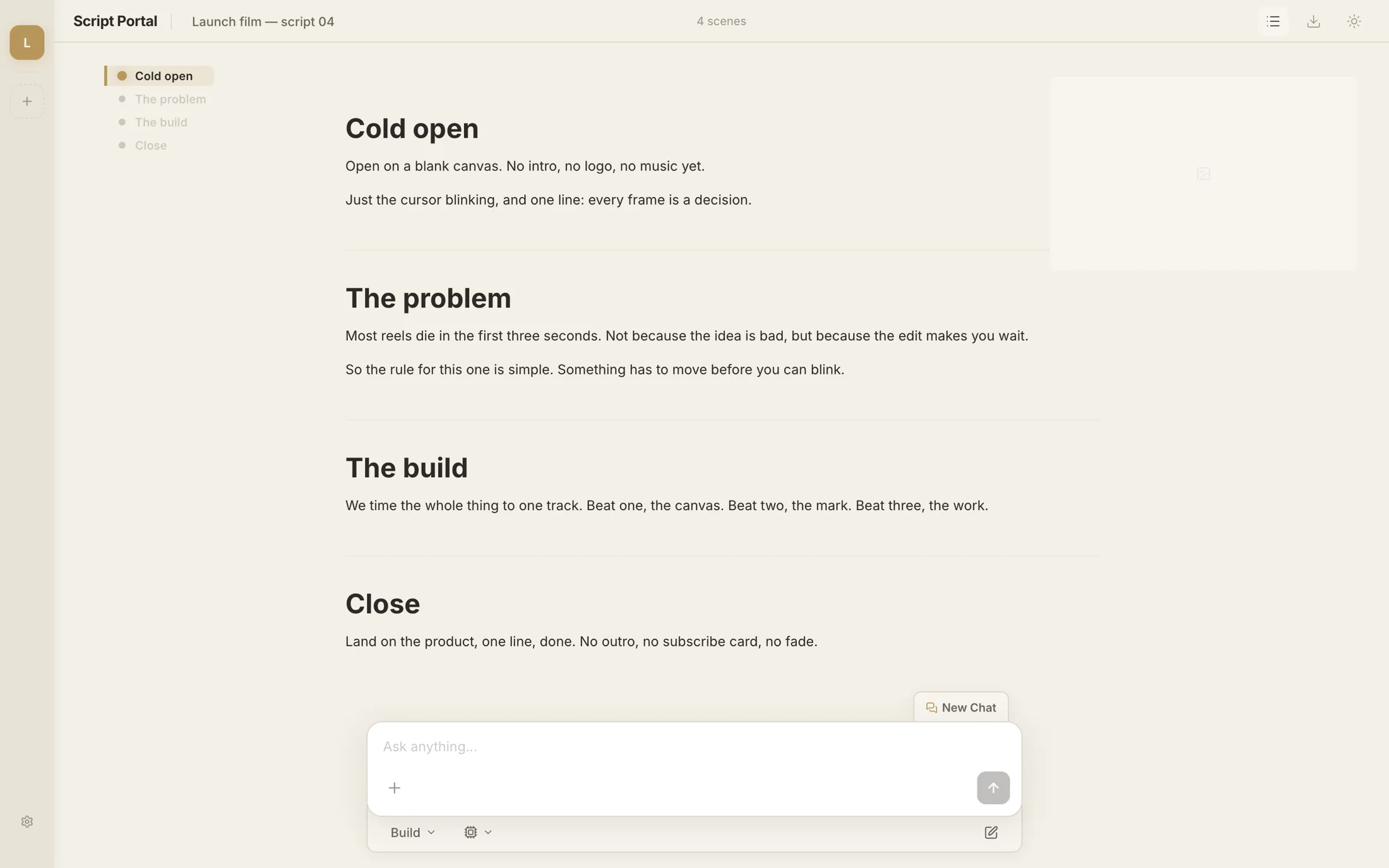
Page view
Every scene as a section, in order, the way it will play.
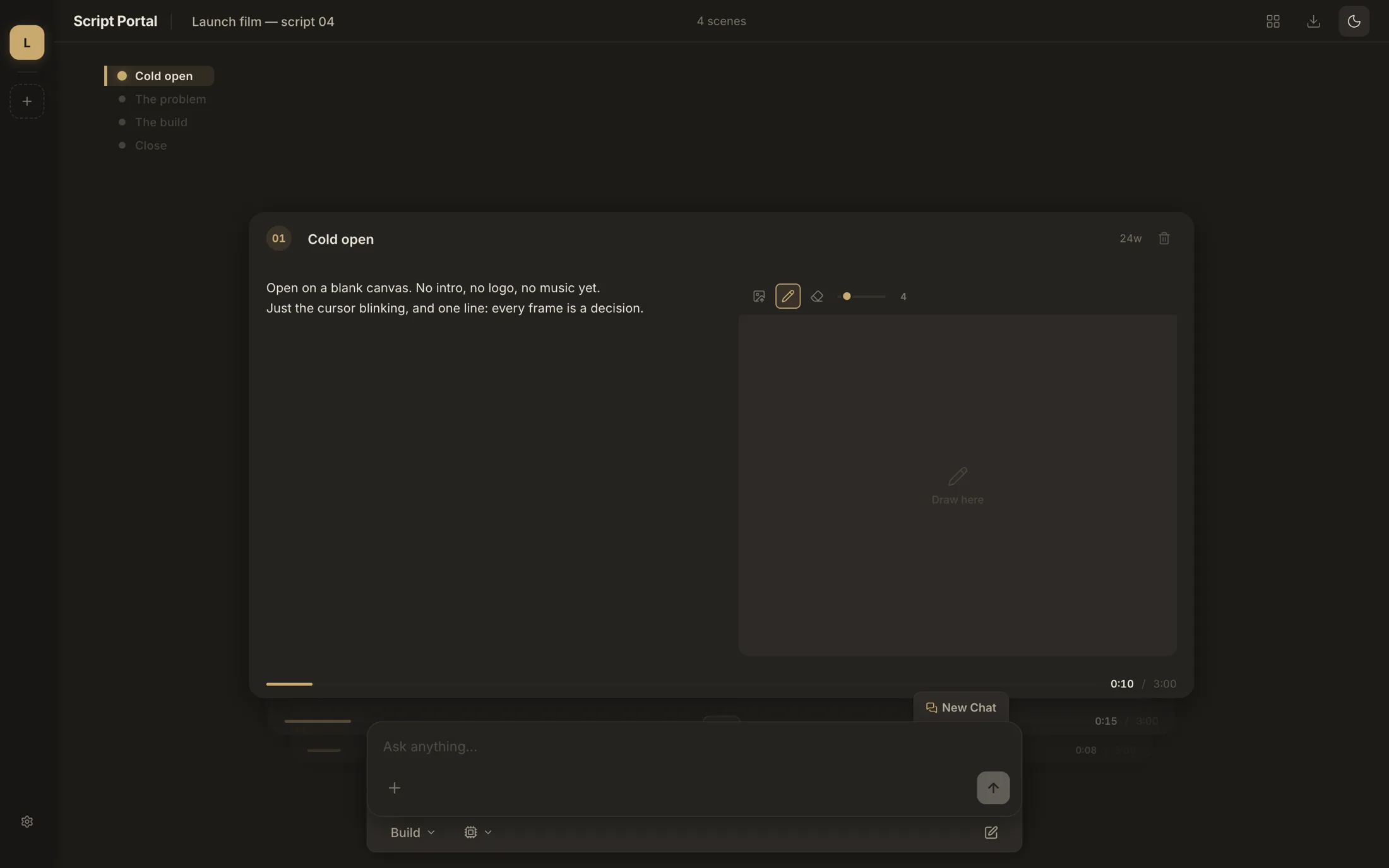
A real dark mode
The card stack is themed, and it can follow the system if you want it to.
03 · Slash commands
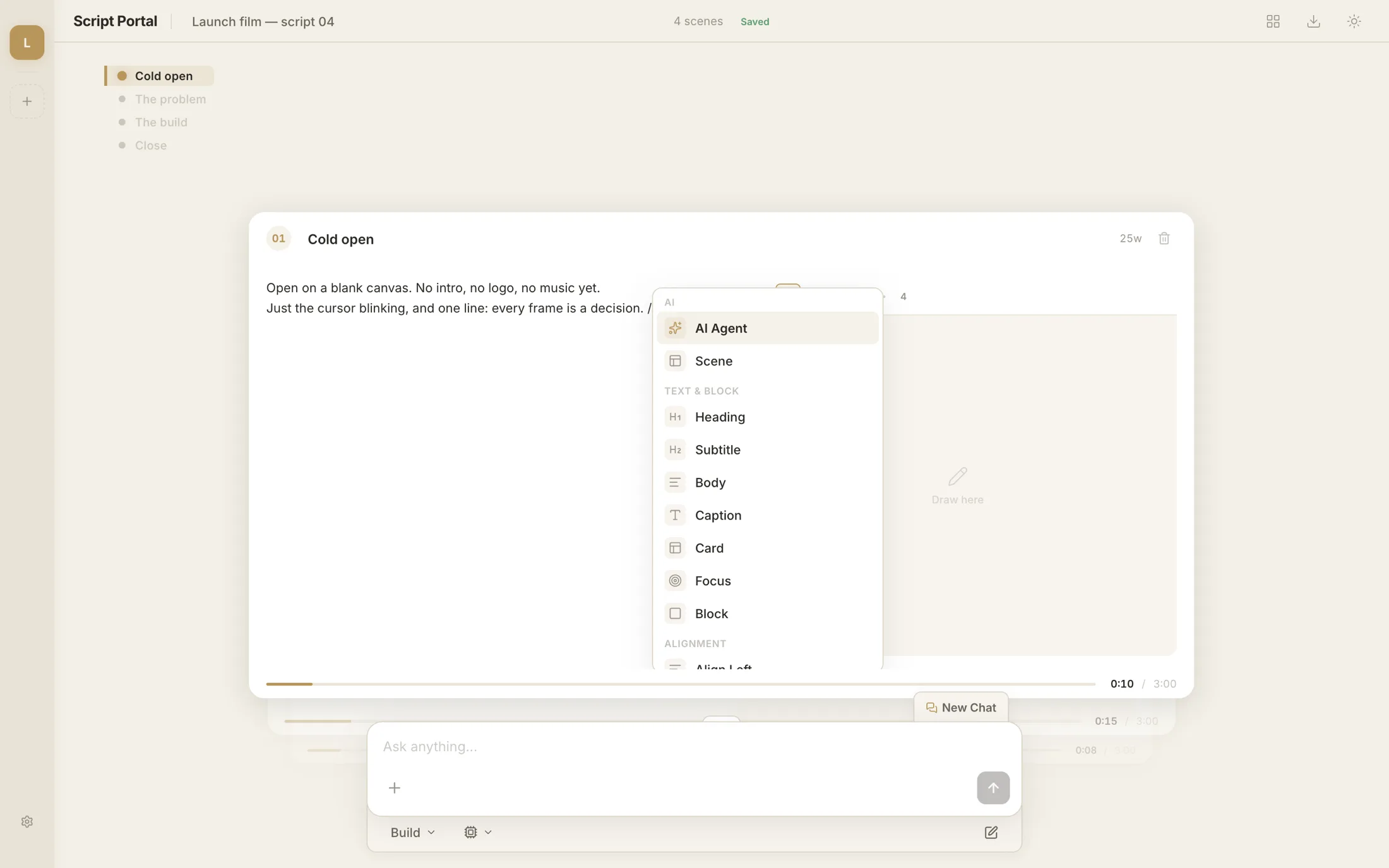
Type a slash and the editor gets out of the way
The block menu is Notion-ish on purpose: headings, lists, alignment, a divider, an image. The AI agent is the first entry, so the fastest path to help is the one you reach for first.
04 · The agent
An agent with a memory and hands
The agent is not a sidebar bolted on. It keeps a history per project and it can call tools, so it works inside the script rather than talking about it from outside.
Chat history
Every conversation is kept with the script, so the context does not reset when you close the laptop.
Tool calls
It acts on the project, not only answers questions about it.
You keep the words
The agent is a second pair of hands. You are still the author, and the draft is yours.
05 · The details
The parts that make it a tool and not a demo
A shot list per scene
A drawer for the shots a scene needs, so the plan and the line sit together.
A sketch pad
Space to scribble the frame before you write what happens in it.
Duration from word count
The scene estimates its own length against a three-minute target as you type.
Undo that holds
Deleting a scene or a script shows an undo, so the destructive button is safe to press.
Three themes
A warm light, a dark, and a mode that follows the system.
It remembers
Scripts and scenes are saved locally as you type, so there is nothing to save.